
The art of a meaningful conversation based on the concept of brief-time strength-based interviewing and coaching. 15 lessons, 10 examples of interviews.
Innehåll
- Introduction to the course
- Your Talkshow or Podcast can be used for many purposes
- About this online course
- How do you define quality?
- Content and guests
- A word about technology
- Keep it short and simple
- First, look at the big picture
- Focus on the future, not the past
- The first phase: Permission
- The second phase: Content
- The third phase: Delivery
- The fourth phase: Reading
- The fifth phase: Precision
- A template to follow
Del 2 av 15
Your Talkshow or Podcast can be used for many purposes
– Interviewing (from friends and family to leaders or celebrities). Do a Talkshow with your family. Do birthday or anniversary interviews. Interview colleagues, bosses, teachers, local celebrities, or personalities. Get that quirky friend or acquaintance to open up and explain how they think. Ask that cashier how they maintain that sunny look on life even when customers complain. Find out how your friend turns a seemingly boring job into a work of art and wonder.
– Themes. Do you have a particular interest in horses, cats, books, Legos, sports trivia, film stars, astronomy, marathon running, filmmaking, acting, politics, fashion for ten-year-olds, creative writing, mystery novels, ballet, 1950s rock, 1990’s sitcoms, wealth accumulation, time management, climate change, servant leadership…. Whatever the theme of your interest, you can find experts or others with the same interest to interview. Molly’s Pony Ride Adventure Talkshow – why not?
– Lecturing. Tired of sitting and listening? A Talkshow interview will give an expert or author an alternative or complementary way to present his or her information in a form that more easily will capture an audience. Lectures can be fine, but complemented by insightful questions will give even more food for thought.
– Learning. Want to learn something new, from how to fix a plumbing problem to how to learn about a new culture to how to take better photos? Invite an expert to your Talkshow and ask them to show you – and then share it with others who want to learn. (Remember, it’s called Talk and Show, almost like your kindergarten ”Show and Tell”).
– Clarifying. Use, for example, a 15-30-minute Talkshow to get the ball rolling at a conference, course, or board meeting. Ask insightful questions about purpose, goals, values, or procedures. Imagine how you can liven up your staff meetings with a Talkshow format to start things off. It’s a way to get more people involved and engaged.
– Analyzing. See someone do good work, give excellent service, solve a problem, make an excellent presentation, change someone’s opinion or make a challenging task look easy? Well, invite them to your Talkshow and learn how they do it.
– Hunting. Finding other people’s talents, strengths, and values and giving another person a boost as they find their next step – what could be more rewarding? Remember, you are in this for the people you talk to, not just yourself. Help others grow, learn, think, make decisions and find their next step. They will appreciate the boost as you encourage and puff them onward.
– Authority. A major advantage of having your own show is that it gives you authority and makes it easier to connect to new people or well-known people as a host of a show. Surely, ”Would you like to be a guest on my Talkshow?” beats ”Can we meet up so I can talk to you?”
There are many options:
– Become a better conversationalist. The skills you learn in this course can be applied in almost any situation or conversation. Become better at listening, questioning, supporting, and encouraging.
– Start a video blog, YouTube channel, Zoom show on a theme that interests you and where you think you can get an audience.
– Start a Podcast, get your own show on a web radio program or maybe be a part of a radio show. These days with your mobile phone, you can do interviews with anyone anywhere and audio is, naturally, a little less complicated than video.
– Do interviews like a journalist would do to meet certain people and get information.
– Do a pilot for television. There are so many channels and production companies out there looking for content. Pick a nisch and work a form that would fit the channel you wish to reach.
Watch the film with Natalie Nielsen
Natalie Nielsen is an educator and coach, Ph.D. The subtitles in this interview give a good overview of the process of these strength-based interviews. I look for keywords and try to explain the process Natalie (and others) use to reach their goals, complete their projects or make decisions. In the first example with Sabrina I asked you to try to summarize and analyze this approach. Here the subtitles help explain.
The video below is also a very good example of this type of interview based on strengths and strategies. Watch the video with Magnus Rittby, professor of physics at Texas Christian University. Again, try to analyze what I am trying to do. The subtitles explain a lot.
Del 3 av 15
About this online course
This course is mostly about the art of a so-called clarifying interview. The technology, editing, and nuances of sound, light, camera angles are important, of course, but will not be my focus. There are others who can show you the correct technology with a good sound and lighting system. Others can tell you how to market your Talkshow or Podcast and get a large following. Others can show you how to get sponsors and supplement your income or make a living as a Talkshow host.
This course will focus on the art and science of asking good questions. You will learn:
– When to be tough and when to be soft
– When to dig deep and when to leave things alone
– When to interrupt and when to be patient and silent
– How to make your guests comfortable and get ”permission” to prod
– How to look for keywords
– How to find strengths, talents, and values
– How to summarize
– How to use your body language to supplement your words
– How to observe the body language of your guest
– How to move from abstract principles to concrete behavior
– How to use the rule of ”Within 48 hours.”
– How to understand how small changes can have a significant effect
– How to follow-up
– How to be brief and to the point
– How to use your Talkshow format in various settings
– How to do a brilliant interview in five to twenty minutes
In other words, this course is about how to be a Talkshow or Podcast host that both your guests and your audience admire and appreciate. This course will help you be good at what you do. Technological skills and marketing skills are also necessary, but first, you have to have a quality product.
You and your Talkshow are the quality product, and I am here to give you the skills that will make people listen and say, ”Wow, thanks for that question. I learned a lot.” Or, ”It was so well worth the time to listen to your interview.”
You’ve no doubt seen or listened to hundreds and hundreds of Talkshow episodes, podcasts, video presentations, and the like in your life. You’ve seen the masters at work on TV and seen how the guests react and interact with their host.
If you are like me, you have your favorites, and you have your pet peeves. Here is one of mine.
On the top of my list of pet peeves are the Talkshow hosts who think they should be the center of attention. They talk too much and overwhelm their guests. They talk too fast. They talk too loudly. They do not make their guests feel comfortable. They talk about old news and do not move the guests forward. They haven’t done their homework or preparation.
Sure, they may defend themselves by saying they are in the ”entertainment” business, and there is nothing wrong with emphasizing the ”show” part of the Talk-show. I say I am in the ”learning” business, and that is my approach. Go to a course on stand-up comedy, go to acting school – that’s fine. I simply want to learn from my guests and see how they react to my thinking and questions. My ambition is to help my guests grow, learn and define their next steps. In the process, I learn.
You may have another purpose, but this is mine and the orientation of this course.
A note about my background: Ph.D. in educational psychology, former school principal and university lecturer, consultant, and the author of 55 books. Most of the books are in Swedish – my roots are in the USA, but I have lived in Sweden for 50 years. My greatest concern is the status of educational systems around the world and how education can help explain, defend and develop our democracies. I have also hosted a TV show on the Swedish educational TV network. That show was called Dr. John (I guess Dr. Phil couldn’t make it). I’ve also had my own web radio Talkshow as Dr. John. I do Zoom-based and live interviews in a format I call The Empowerment Talkshow. (steinberg.se/talkshow)
Watch the film with Caroline
The third interview is with Caroline Hammarskjöld, who works on a big project to preserve the heritage of her Great Uncle, the former Secretary-General of the United Nations, Dag Hammarskjöld. Gain, the texts in the recording explain parts of my model for these strength-based talks and you will see how I pick up on keywords and ask clarifying questions that often make the guest pause, look away, sort, prioritize and think more deeply. You are affirming what they do well and what works while at the same time helping your guest to look forward towards next steps.
Del 4 av 15
How do you define quality?
If the goal of this course is to help you develop a quality product, you need to think through what you mean by quality. What do you mean when you say you saw a great film or read a good book? Why are you recommending friends to stream that series or listen to that musician? What makes for a fantastic public speaker in your eyes? Why is that leader, teacher, or politician so much better than all the others? Why are you comfortable with one salesperson but not the other?
Let me give some examples of things that I have experienced in the past few days.
I am in the process of buying a new car. I hate the process because I have little knowledge, little interest, and little time to care. I am very sensitive to how the car dealership looks and how the salespeople approach me (or not, because sometimes they are hard to find). The salesperson I met knew his stuff, could answer any question I had, and seemed to not at all be bothered by my uncertainty, doubt, or indecision. He was patient but fast with his fingers on the computer to come up with solutions and suggestions. He was not a person with a tremendous amount of personality or charisma. He just did what he does very well and fit my state of mind. His competence was comforting. And yes, I signed the contract.
I watched a popular Talkshow host on TV the other day. The host has done this for many years and has an excellent reputation. He can get people to open up, laugh, and get his guests to interact with each other, but I think he is extremely uneven. Some interviews are just great. Some are semi-disasters and last week’s last interview was in the disaster category when an athlete shared an emotionally disturbing incident. The host more or less left her out to dry, opening open an emotional wound and not helping her close it. I am almost certain she did not feel too well about herself or her decision to go on the show after that interview.
The other day I was the first person to use a new streaming studio. If the technology doesn’t work, it affects the way the lecturer is perceived. My professionalism is crucial to me. It simply has to work. And, of course, things broke down seconds before we were to go live. The person who set up the studio and was running the streaming service went about calmly doing what he could to reboot by switching computers. We were five minutes late getting on the air, but his calmness, composure, and problem-solving skills – along with a super positive attitude – saved the day. I admired his ability to help me avoid becoming overly nervous and stressed out. It made me calmer as well, and confident things would work out in the end.
How do you define quality service? What is quality leadership? What is quality teaching or lecturing? The closer you can get to finding the reasons for quality or your definition of quality, the easier it is to help others find and utilize their best selves and in the process, help others.
That car salesman helped me not only buy a car but helped me in my decision-making. That Talkshow host showed me what not to do – and that’s important too. My technician in the studio helped not only to fix the problem but to ease my stress.
These secrets of how we act and interact are great things to share. What is that person’s secret power? What are their strengths and talents? What makes them so good? How can you bring out and show the small things they do well that make them so effective?
Bringing out quality, bringing out brilliance – do that well, and your Talkshow will grow in its influence and importance.
Watch the interview example with Maria J.
The first three interview examples were of so-called strength talks. Here’s an example of a ”dog-talk” trying to prove that you can still make the conversation have a much deeper meaning from something seemingly simple. Watch. Compare the first two examples. Do you see the similarity in structure and purpose? I assure you, that you can that a good conversation can have virtually any subject or event as a starting point. This is about Maria’s dogs, and if that’s your thing, interview dog owners. Just choose a topic or theme that interests you and go for it.
In this and further interviews, notice how I use keywords, trying to understand the connection between values and behavior.
Del 5 av 15
Content and guests
What should your Talkshow be about? The obvious answer is that your Talkshow should be about something that you care about. For example, I am interested in what makes people tick. By that, I mean how people become successful in their fields, make an impact, or contribute to positive change.
Interview people who do quality work from any profession or walk of life. They certainly do not have to be famous at all, just the people you meet in daily life that you enjoy, admire, are curious about, or wish to understand better. How do they think and learn? How did they develop their values or that positive, optimistic attitude? How did they get into that field of endeavor and how do they make lemonade from lemons that life has given them?
Be curious. That’s the best advice I can give you and there is something to learn from just about anybody. That means you don’t have to go far to look for people to talk to or interview.
In this world of ”nisch” marketing, you can virtually choose any topic whatsoever and find enough people that are also curious about it. We just got a puppy, so I have started interviewing dog owners. I interview teachers who go against the system and have fresh ideas simply because I am extremely frustrated by our educational systems. I interview behavior scientists because that is my field of endeavor.
My life theme and life purpose are to empower people to empower themselves. That then is the overarching theme of The Empowerment Talkshow, with the goal of each guest learning a little bit more about themselves and their path forward.
Maybe you already have started a podcast, videocast, or your version of a Talkshow, so you know your topic and content. If not, do the following:
1. Write the names of five people that pique your curiosity. Chose people that are within the realm of reality to invite and meet. It’s probably pretty hard to book a national politician. Still, you’d be surprised how often local politicians and local personalities would be willing to come on to your show, live or via Zoom or similar services. What do these people have in common? Seeing that will get you closer to your theme and the main topic of your Talkshow.
2. Write down three to five goal groups for your Talkshow, such as Cat owners, Rock collectors, Social activists, Nutrition experts, and Finance – things you are interested in yourself. Is there a connection between point one above and point two?
3. Write down three ”I have to learn XXX” sentences, three things you need and want to find out about.
4. Write down three examples of things that you know a lot about. What could you talk about all on your own without a guest?
5. Looking at what you have written, now choose a theme. Play with various alternatives, some that are on a high meta level like mine, The Empowerment Talkshow, a theme that can encompass a lot of variation. Or, the Puppy Poop and Pop Show, certainly a specific niche topic geared to puppy owners would want to know about (by Pop, I mean harnessing a puppy’s enormous bursts of energy). You can go either way – macro (general) or micro (specific). Many say that going micro is the only way to go these days. Sorry, I am a Macro kind of guy, and in the end, you have to do it your way, not just the way the market seems to work at the moment. Micro means finding a nisch by hunting a small but curious or ambitious goal group. As you will see in this course, it is a wise idea to combine the Macro with the Micro.
6. Choose a name. Sounds easy, but, nope, you need to put a lot of time and effort into this and test it with many people. Is it easy to remember? Does it get people curious? Will they immediately understand the purpose? From there, you need a blog, homepage with your URL, or other places where you can place your recordings if you choose to save past episodes – which, of course, you should.
7. Finding your theme will come easy to some people. Others will struggle. I’ve struggled because my interests are so broad. These days most marketing gurus say to choose a nisch, focus on a unique goal group and dig deep. I find that hard, so I have decided to stay broad but link myself to a larger so-called meta-level: people who want to make Talkshows. The topics can vary, but the overall process is what I’ve chosen to help you think through.
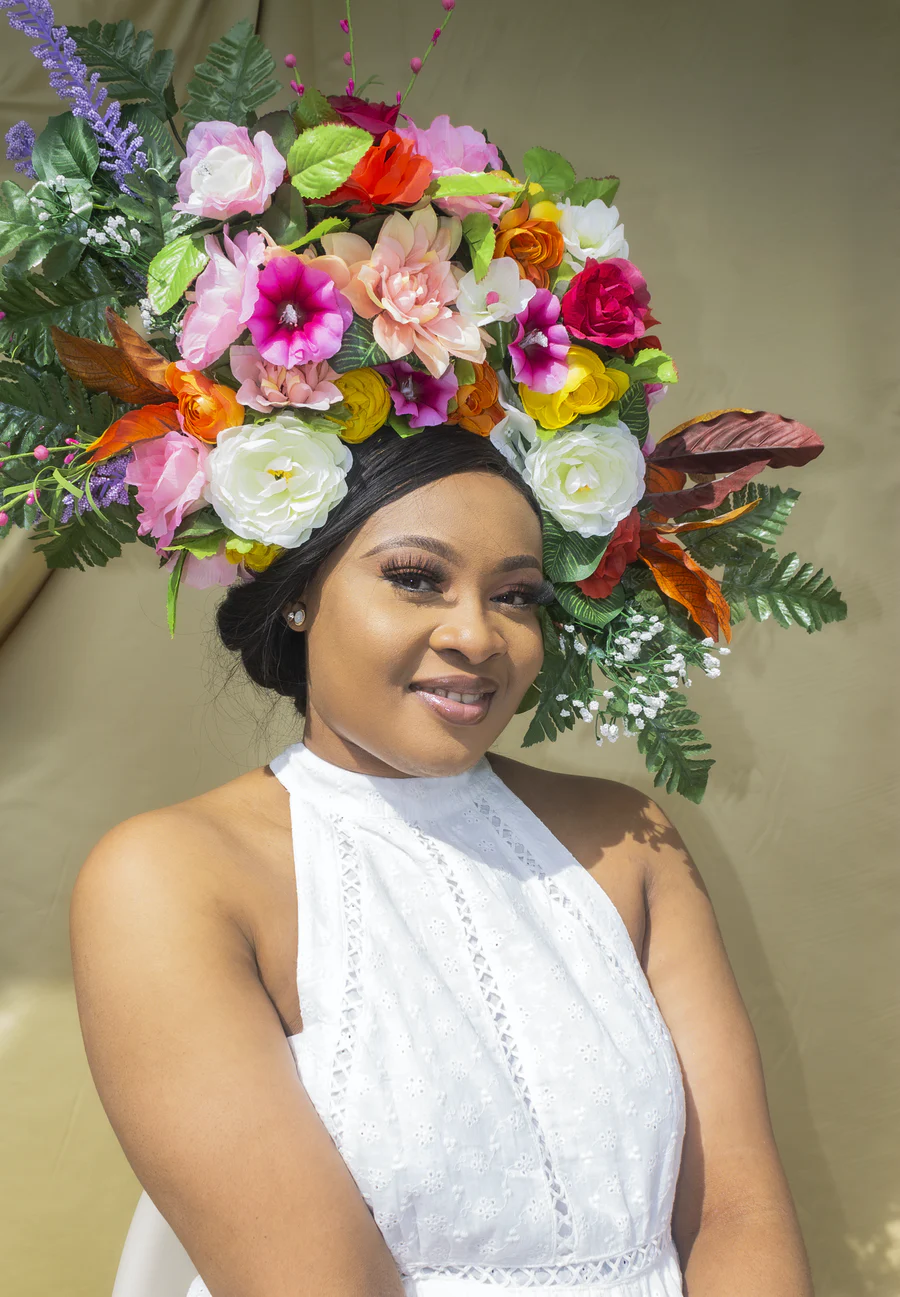
Photo by Motunrayo Babatunde on Unsplash
Let your guests bloom
Del 6 av 15
A word about technology
There are three levels to consider: amateur, mixed level-amateur, or professional. Amateur, of course, is the do-it-yourself level. You can use your smartphone or a simple camera, sound system, and lighting system on a level that you think you can manage. You can learn to do elementary editing of your audio or video. You can simply send live on social media or place films on a site like YouTube or Vimeo. There are many do-it-yourself alternatives. The more you can do on your own, the less expensive the production will be.
But you know there is a but… but it still takes time and effort, and you have to consider your goal group. Will they be satisfied with your simple way of recording and editing? Will they want an opportunity to view your Talkshow at their convenience and not only when you perhaps are sending it live?
You can get attention and spread your ideas on this level, which is acceptable to most people. It is a logical first step, and most everyone understands that it will not be professionally perfect. But you are out there, and that’s a good start.
The professional level means collaborating with or paying for the services of a person or company that produces audio or video files at a high level. Even the placement on a forum where many people may see your film, blog, or podcast may cost a bit. Is it worth it?. Oh, yes, if you have high ambitions for your show. At least it may be worth the cost to produce a high-quality pilot. If nothing else, you will learn how professionals think, create, design, and utilize their technology. A high professional level will cost you, of course, but sometimes it is worth paying for professional help. There are many sites where you can get freelance help relatively inexpensively, like Fiverr or Upwork.
The mixed-level amateur consults with friends with experience and experts to learn from them or perhaps gets help with the sound, lighting, or editing. It’s, of course, good to get help and have someone do the recording while you focus on the interviews. You should, however, understand that this is an in-between level, and that can be frustrating both for yourself and your viewers. It’s easy to be stuck here, and people perceive what you do to be sort of okay, but not real good. So in many ways sticking to the amateur level is more acceptable. On the other hand, most productions out there are on this mixed amateur level.
Sound is usually the most challenging aspect of making your Talkshow. Lighting, well, sure, but you can get by with simple lighting systems, but it’s a problem if the sound quality is poor. After all, it is called a Talkshow, and if you can’t hear the talk properly, you’re in trouble. There are good wireless systems you can get with a bit of an investment, but most of the time, a system with a cord into your phone or computer produces better quality but lacks a bit of flexibility compared to wireless or USB solutions.
Again, your decision should be based on your level of convenience, quality, and goals. Indeed, we have learned from TikTok and other social media sites that you can get very far on the amateur level.
Get advice. Test. Get feedback. Keep learning. Keep improving.
When you watch my interviews, you see I am acting on an amateur level. This is on purpose because I want people to think that they too can just get started. I make lots of mistakes, experiment with lighting and sound and there is an uneven quality about the interviews. For me, it is the content that matters. More importantly, this fits my personality. I am not a perfectionist, indeed, I make countless mistakes every day. I am a “just do it” person, fast and wrong, for me, is better than perfect but never. You have to find your way, but if you think I am crazy to launch a course on how to produce a Talkshow and haven’t myself as course leader tried for near perfection, this is my explanation (or alibi).
Notice the difference in your comfort level between going live and recording to use later. Live can be very exciting and get you to focus and concentrate. Recording gives you more flexibility. You will make mistakes. There will be uhhss and umms and silences and some ehhhhssss. Think of it this way – you are using a language that you don’t fully have a handle on, talking to a native speaker. You are not fluent, but the person you are talking to will be very accepting of your uncertainly, glad that you are trying out that new language. You will not have 100% flow when running your Talkshow either. You will have your share of ehhs and umms, (I certainly do)and that’s okay. Your audience will still listen if you ask good questions and get your guest to explain and clarify. Give yourself a break as you learn and find your flow.
Of course, the complete flow of words and all the other technical matters working perfectly is surely the ideal. I have simply decided that the decent amateur level is still okay, and I’d advise you to think that way so you can get started. Always seek to improve, of course. Adjust your sound, lighting, and eye levels. Help your guest get it right as well. Just don’t let any of these issues stop you from doing your Talkshow, Podcast, or live broadcast. The quality of your conversation is what’s most important, after all.
Make a list of your tech needs and what you have, need to get, and need to learn more about. Then, make a checklist of things to think through or do for each Talkshow.
Watch the interview example with Lara.
Here’s one more full interview. As mentioned, I, purposely (or I am just plain cheap), use the amateur approach. Technology is not unimportant. This time, look less at content and structure and make a list of all the practical and technological factors that could be improved. It will be a long list, I am sure. Then, think and reflect – does it really matter that everything is not perfect? Of course, that depends on your purpose and goal group. Just get a sense of all the details you do need to think about so that, despite an amateur effort, your content is still deemed watchable and valuable. Next time you watch another person’s video, try to figure out their level – amateur, mixed amateur, or professional. What fits you, your budget, your goal group, and your ambitions? As you watch my videos in this course, you will certainly notice that the lighting isn’t perfect, the sound levels of my guests and me don’t always match, and even the camera positions vary. You decide if this is a deal-breaker or not in following a Talkshow, Podcast, or media interview.
This interview with Lara is obviously done with me on my computer and Lara on her cell phone, but it still works content-wise. Look through the interview another time, this time with a focus on the content and my process.
I call this a learn-interview, something I often do with young people. Even three-year-olds can describe their learning process. Notice that Lara’s attitude and goal setting influences her ability to make time to study. She also has strategies for her learning, which helps a great deal. We can say her learning has a purpose and that certainly helps her motivation and ability to set aside time.
I would highly suggest you try out some learning interviews with children or young students. You may be surprised by how much they understand the learning process. There will be several more interviews with students that I use as examples in this course, and I am developing a separate course about how to do learn talks with students.
Del 7 av 15
Keep it short and simple
My concept for a Talkshow may differ from yours. For me, the concept of a Talkshow is very broad. I could call it coaching or counseling, but that gets the certified coaches and counselors upset – and probably for a good reason. I could call it a discussion or conversation, but that sounds too laid back. There are elements of psychotherapy I have integrated into my style, but surely you don’t want to call what you do ”therapy.” I decided to call what I do a Talkshow because I like that idea and see it as a flexible idea (see the list at the beginning of this course).
Your time frame should be your reference point. Watch any television Talkshow, and you will see that the typical time frame for a guest is almost always a maximum of seven minutes. If you wish, call what you do an interview and then you can go longer, or define your Talkshow as long-form interviews like many podcasts are.
Here, we will go through the phase of a short interview, conversation, or discussion.
Why so short? Number one is that there is so much stuff out there that most people don’t have the time or patience to listen or watch for long periods if it isn’t something they deeply care about or want to learn. But my main reason to keep it short is that I am personally fascinated by how far you can come if you ask the right questions and follow up in an exemplary manner – which is the essence of what we will be doing here on this course. My focus will therefore be on the 3 to 20-minute interview/conversation.
Please note that these skills will come in handy in any conversation, not just when you have your show or do an interview. You have dozens of conversations every day that are very brief. What if you could leave each conversation with the other person feeling encouraged, feeling a thought has been clarified, with the next step within 48 hours on their agenda? See my free course in the Empowerment Education school on Teachable called One-foot coaching and conversations.
No, you don’t have to (and shouldn’t) make yourself into this question-and prodding machine. Still, you certainly can help each other to clarify a small part of each other’s values, approaches, ideas, and next steps, all in just a short conversation or interview. This is what I’ll be showing you, and you’ve seen a few examples already.
The form you choose is up to you. There are so many alternatives these days, from podcasts to audiobooks to videos, and so many options for where you can store, distribute and market what you have to offer. Does it matter where you place your Talkshow? Of course, you want to look for a place where you are comfortable, maybe already have a following, or where you can most easily find the people you wish to reach out to.
Watch the interview example with Felix.
This is one of my favorite interviews, also a part of the Eureka Moments for Teachers course. It’s with Felix and about his learning process. Isn’t it amazing how well children can explain their learning process? One purpose of this online course is to encourage teachers and leaders to have these short strength-based conversations. This talk takes nine minutes. Isn’t that a very wise and efficient investment in relationship-building and strength-finding? My job is to find the keywords that describe how he learns and affirm his abilities. Do this by summarizing keywords and explaining the skills, attitudes, and behaviors that led to success.
Del 8 av 15
First, look at the big picture
What do you want to accomplish by starting your Talkshow (blog, podcast, etc.)? What is the philosophy behind your approach?
Let’s get one thing straight. The best mentors, coaches, conversationalists, and Talkshow hosts know that their purpose is to put their guests at the center of the conversation, not themselves. You shine by getting others to shine, so please don’t worry about yourself; worry about asking quality questions in a manner that puts your guest at ease and prepared to reflect, analyze or prioritize various choices.
This is not to say that you are not the focal point of your Talkshow. Indeed, some of the most famous Talkshow hosts of the past, like the Brit Michael Parkinson or the American Larry King, were the centerpiece on the table. There was no doubt that the most famous Talkshow host of modern times, Oprah Winfrey, was the centerpiece of her show. But Oprah and others seemed to be genuinely interested in learning from their guests and wanted to explain to the world what their guests had for special ideas, experiences, talents, or values. Yes, you can go the nearly 100% entertainment route like Johnny Carson did or Graham Norton still does, with a touch of seriousness now and then. You can also go the news route, like Barbara Walters and Christiane Amanpour have shown us.
For me, and I hope for you, the big picture is that you are there to bring out the brilliance, talent, strengths, and values of your guests. Only when you understand this basic concept do you have a chance to be successful if you are not a top-class entertainer, journalist, or comedian – and then they have to do it too to be genuinely interesting in the long run.
As you, no doubt, understand, this is also the essence of a good conversation. Sure, you can tell your tale, and share your feelings and experiences, but you become more interesting by making your conversational partner more interesting. Not only that, but you will also become more attractive – physically and psychologically. Really!
One of the challenges is to decide on a format that is within range of your finances, networking skills, and level of ambition. As mentioned before, you can go down the amateur path, which I have purposely chosen, or the full professional path. But, just so you know, a thoroughly professional twenty minutes NPR podcast (most of which I love and admire) can take weeks, if not months, for 5 to 10 staff members to get near perfection.
My suggestion – start simple but with a deep purpose. Borrow mine if you wish: to bring out my guests’ brilliance, talents, and strengths.
Borrow also my humanistic philosophy if you wish – that each individual can make a unique and valuable contribution locally and globally when acknowledged, accepted, trusted, and encouraged.
Watch the interview example with Dylan.
Here is one more learning conversation, this time with Dylan, who is fully aware of how to get from A to B. He knows the importance of attitude and strategies – and the importance of commitment. Again, notice how well a young person can explain their learning process. You are by now, no doubt, familiar with my pattern and interview routine. How does it fit with your approach? What form type of interviews and conversations would you feel comfortable doing? What form och type of interview would be a challenge and exciting to try.
Del 9 av 15
Focus on the future, not the past
Let’s say you meet a person that is obviously from another country or culture. It would be quite natural to ask them, ”Where do you come from?” Please don’t do that. They’ve probably told their story hundreds of times. Ask them, instead, ”Where are you going?” When you ask a guest to come on your show, it is more than likely because of something they have done in the past. Maybe it could be about something they have written, filmed, designed, constructed, experienced, or spoken out about.
That’s fine and a reason for your curiosity and a reason that would be interesting for your audience. Sure, ask about that. But don’t dwell on it. You don’t have to look very far to find interviews that dwell so much on the past that, in the end, they turn boring and uninteresting.
The other evening I watched a sort-of talkshow-reality show with a few famous actors and musicians. The most wildly popular, famous person was an excellent, acclaimed singer. The program and interaction on the show focused almost 100% upon her past. It was fun to be reminded of some of her hits, but, in my opinion, complemented with a look to her future, would have made for a better segment on the show
Look at it this way – you have a friend who is upset and sad about just ending a long relationship. Surely, you want to give support, listen and show empathy for their emotions. Do that. But if you let this looking back at all the injustices, all the conflicts, all the faults of the other person go on and on and on, well, there comes a time when the conversation has to move to the future. What now? What have you learned? What do you not want to repeat? What are you looking for? What do you want to do differently next time?
No, you don’t have to, nor should you, ask all those questions, and maybe let the venting process take its course and wait a few days or weeks to move on. I am guessing you are curious and would want the conversation to move forward after that emotional venting. The point – move forward even if so slowly.
You’ve seen dozens if not hundreds of these interviews – the athlete talking about their drug use or doping and how they turned around (or ruined) their careers—the politician talking endlessly about the faults of other parties, politicians or policies. The actor only being asked to speak about their old films instead of new projects. The adventurer is constantly asked to retell a story of an event from twenty years in the past. The fallen hero is asked to explain him or herself over and over and over again. The new hero asked over and over and over again why they had been successful.
Fine. I am sure you and your audience are curious. Make a point, tell a story, and then move on. Please. The future awaits. What next? Just stop digging a ”dwell” and get to the learning, the growing, the rethinking, the replanning, then restarting, and the fundamental values and reflections part. That is not only going to help your guest but also help retain and interest your audience.
Sure, this is tricky. When to allow ”dwelling” and when to stop the digging? We’ll get to how to know when to dig and when to let be, but first, know that while understanding history is crucial to understanding the future, it’s the learning in order to meet the future that is the interesting part. Help your guest to learn and grow and see a possible future.
Watch the interview example with Charles
Here’s another what I call an empowerment interview. See if you can connect the dots between the big picture purpose and the small actions needed to move forward. Before we go into the details of body language and other details of a good interview or conversation, take another look at this approach and see the advantages and disadvantages. Do you get my purpose and method? What would you do differently? How would you explain the purpose of your own Talkshow?
Charles is a good example of a person with a job who also has a hobby – writing children’s books with different value themes. Charles is doing the work needed to turn his hobby into a business, not just creating, writing, and publishing but thinking of marketing strategies and how to gain attention for his books. I don’t mind at all giving him a little help with PR and encouragement for his efforts or share the value-oriented purpose for his endeavors.
You have seen eight full interviews. What are the common traits? Do you see the similarities in their structure and purpose? Do you see how I try to connect their value system with their actions?
Now we move on to more of the details through an analysis of the five phases of this type of Talkshow interview.
Del 10 av 15
The first phase: Permission
The first phase of your Talkshow is getting your guest in a state of mind that permits you to ask prodding questions. By prodding, I mean digging a little deeper by asking reflective questions that require your guest to clarify their thoughts and ideas. It’s an art we will soon address.
How do you get permission? First off, you will need to get guests to come on your Talkshow, Podcast, or another form you are using. Some people will be eager, no questions asked. Others, perhaps some of the popular or busy people you want to meet, might be hesitant or simply say they don’t have the time. It’d be nice to have a production staff do the hard part of chasing guests down that may be difficult to get in touch with, but if you are the amateur level, then that is work you will have to do on your own.
If you are just starting, stay within the network you already have to practice doing your interviews in order to get a couple of pilots out there for people to see. Interview people, you know or are recommended by a colleague or friend. Get feedback from people you trust.
Invite. Explain the purpose of your show. Explain a bit how it will work – time length, what you will focus on and how you think the sharing of their experiences or expertise will help others. In your first phone call or e-mail, or invitation, explain that you are curious, want to learn, and appreciate their contributions. Explain the process – structure, place, and technology (live or virtual). Be friendly and encouraging but also be persistent. Make sure they know that they are very important to you and you value their perspective or advice. Let them know how you can spread the word about what they do and have an important message for listeners.
Not everyone will agree to be on your show every time, but explaining the purpose, process, and importance will, in the overwhelming number of cases, get people to say yes. Make it easy for them to say yes. On my radio show, I send live, but otherwise, I ”tape” and promise to send a copy for approval before putting it up on YouTube or my website. It comforts people to be able to say No. Now, journalists cannot always do that, but if you are starting out as a Talkshow host, that may help people with their decision to be on your show or not. Even journalists do this sometimes. I ask to read what they write about what I do before it goes to press, and almost always, they will share beforehand and let me make a few corrections I think are necessary. Again, a hard-core, hard news journalist cannot permit their interview object to dictate the terms of participation, but if you can, it is not a bad idea to give your guest the option of viewing, reading, or listening before you go ”online.”
If you have handled the invitation well, the guest understands the purpose and process and will have a good feeling and understanding of what will happen.
You have your date, time, technology in place, etc., so now it is time to meet and greet. Live – almost always easier – you know what to do. Meet at least twenty minutes before you start the interview and just make them feel comfortable. Go through the purpose and process again.
Test the technology or show them around the studio. Do your darndest to make sure everything works smoothly. Make a checklist.
– Welcome and comfort your guest
– Sound
– Lighting
– Water
– Notepaper
– Outline for your questions
– Introduction notes
– Sponsor information, if you are lucky to find a sponsor
– Computer
– Wifi
– Hard drive and platform for saving your interview
– Upload to platform
– De-brief your guest – talk about the experience
– Follow up with your guest in the next two days
Etc. Add to this list.
Time to start? You are still in the permission phase. Some guests are experienced and at ease from the beginning. Others will be nervous and uncomfortable. Everyone will need some kind of comforting. You want them to trust you, and you do that through reassurance, encouragement, and making sure they understand what will happen.
The more you practice, the more comfortable you will be, which helps you focus more on your guest than on your own feelings or uncertainties. I am a nervous type myself – I treasure professionalism and do not want glitches. When something goes wrong, like with the tech, I get stressed, but with experience, I have learned that I must calm down, and things usually will work out. I am just saying that your state of mind affects your guest’s state of mind.
Think through your introduction. Tell them (and your audience) why you are looking forward to your conversation. Ask your guest a relatively easy question to get them started, such as saying a few words about their work, their experience of the book, film, recipe, or idea they will share.
Get your guest to smile. Share your connection. Share what you are curious about.
Watch for the body language that shows that your guest is starting to relax. They will often breathe more easily and slowly, ease the tension in their bodies as they sit more relaxed in their chair, or still better laugh at one of your comments. They will raise their eyes and look more directly at you. Sometimes, they will speed up and talk more intensely, but the opposite will often happen – their voice tempo will be reduced, indicating less stress.
You will want to be able to ask more prodding or difficult questions, of course, but that will be easier when your guest feels that you’ve made an effort to make them feel welcome and you demonstrate your curiosity – and calm focus.
There is a lot going on in this first phase, from how you make your invitation to participate to how you meet and greet to how you get your guests to feel welcome and ready to talk.
Watch the start of this interview example with Maria W.
Maria is a teacher in Sweden, so the interview is in Swedish, but I just want you to focus on the first 20 seconds. Sure, you can watch the whole interview (about 3.5 minutes) if you wish and understand Swedish, but it’s the particulars of body language I ask you to focus on. Why is it important to make the other person comfortable and even to smile or laugh at the beginning? (Oh, by the way, she is also talking about her dog.)
Technologically this is not a masterpiece, using my cell phone in a room at Maria’s school, this time having the camera at an angle from the side. Once again, my point is getting that first-minute right shows that your guest feels comfortable and is willing to share.
Del 11 av 15
The second phase: Content
What are you going to talk about? We’ll get to that in a second—first, a few words about the form and structure of your conversation/interview.
How many guests should you have? I would suggest limiting it to one or two at the same session. Why? It’s simply easier to handle that than with three or more people in your studio or online. It lets you focus, and it allows your audience to focus. That is not to say that this is impossible to do with small groups. I am simply saying that if you are new to this, you have less to deal with.
Short or long-form? Long-form is a bit easier because you don’t have to worry as much about time, and you can explore several issues. However, you need to think about your audience. Will they want to sit for 30, 45, or 60 minutes and listen? Will they like and appreciate in-depth interviews? Many excellent podcasts are long-form podcasts of about 45-60 minutes. I particularly enjoy NPR’s How I built this with Guy Raz and Steven Levitt’s Freakonomics podcast, People I mostly admire. I listen in my car or when jogging or taking long walks.
If you are using video, doing a long-form interview is more challenging. Audio permits people to move around – clean, jog, drive, and fix things, but video requires the viewer to mostly remain in one place. It can work, of course, but it places more demands on your competence to do an interview that retains people’s attention.
By the way, if you record on Zoom and some other programs or platforms, you can get both the video and the audio files. That means that from one recording you can add to your vlog or turn it into a podcast.
Short-form interviews (3 – 20 minutes) also have their advantages and disadvantages. Short is easier to consume and helps you focus on one or two issues, but that means you have to leave out some questions you want to ask. It also means you must refrain from taking up too much space and time during this short time frame. Even more, your guest has to be the focus of attention.
I enjoy the challenge of a short conversation/interview/coaching session and will go through that process with you. I am just saying that the form you choose will depend on your personal preferences, your time frame, and your audience. Just be aware of the various challenges of each form and time frame.
So, what should you talk about?
I wish I could say, well, here’s a list. That, of course, is ridiculous because it depends on your interests, the interests of your guests, and the interests of your audience.
But here’s my more opened-ended list, anyway:
– What you are curious about
– What you want to learn
– What your experts want to share
– What your guests feel strongly about
– What your guests have experienced
– What your guests have tried to fix
– How to…. (well, how to do most anything)
– Where to…. next step towards the future or just literally where to find something (best restaurants, best people, best places, etc.)
– Why… analysis, cause, and effect, history
– Ideas… plans, hopes, expectations, solutions
– Opinions – yes, but be careful here. Opinion shows are a dime a dozen.
Make your own list!
How prepared should you be? That is an interesting question, and again there are different philosophies. Some Talkshow hosts want to control from start to finish. They have a strict time schedule, a detailed plan, and sometimes a written script. A script can be helpful if you are new at this or simply want to make sure you give a good introduction and conclusion or remember what you want to ask. I wouldn’t say I like scripts but need some keyword notes or sometimes a PowerPoint on my computer, flip-over, cue cards, or notes to remind me of key points. You do know that most late-night Talkshow hosts use cue cards for their jokes.
However, using cue cards does need practice because your viewing audience may be distracted by how you use your eyes or like reading and not spontaneous. There are, these days, cue card programs for your mobile phone, and some studios are able to plant the cameras behind a screen, so as you look into the camera, you can also see your notes or PowerPoint presentations.
Prepare for your guests. Read their book. Watch their film. Check out your guests’ social media posts. Do a pre-interview to agree on key points. Good preparation helps, especially because that will help you feel comfortable – and again, your comfort is key to the comfort of your guests.
But…. And there is a big but. Some Talkshow hosts do a better job when they don’t prepare. Their Talkshows are more spontaneous and give both the host and the audience a sense of discovery. This fits my personality. I do lots of interviews with very little preparation. Why? Well, some part of me is lazy, and some part of me just plain enjoys not knowing exactly what will happen. I love the suspense of it all, and this is one reason I do non-scripted interviews. Sure, I have key points, and also ask discovery questions about their projects, manuscripts, lectures, or ideas. See the template I use in the last segment of this course.
One size does not fit all. If you want to prepare in detail – fine – do that. If you are willing to take a bit more of a risk to make the interview sound more spontaneous, well, then do that. As always, I urge you to try out different things as you set out and see, hear and feel what you think fits you best – and your guests, themes, and audience.
For me, I thought over-preparing was a necessity, but I soon discovered the opposite was true. Be true to yourself, and you will find an approach that works.
Watch the interview example with Mike.
I want to share one of my mentors, Mike Pegg, who lives in the United Kingdom. Rarely will you meet a person who follows his vision and purpose so loyally and who is also able to support that with a specific methodology. The content of the interview takes care of itself because Mike can quickly and confidently point out how to support other people’s learning, visions, and life purposes. Stop the film once in a while to think about Mike’s philosophy and approach. He surely has made a great impact on my way of thinking.
Most successful people – leaders and mentors – have a very clear concept of their purpose, values, and strategies.
Del 12 av 15
The third phase: Delivery
This section will mainly discuss the non-verbal aspects of Talkshow hosting. Content is about your theme, structure, and ”what” you do. Delivery is about ”how” you do what you do.
Think about how you behave when you go to a party where you will meet many people you have never met before. Maybe you look forward to meeting new people and enjoying your extrovert side, networking, and reaching out. Perhaps you dread that party and all those new people and, as an introvert, immediately look for people you know or a space where you feel comfortable. You find it difficult to figure out what to say to new people.
Your behavior is reflected by your attitude. If you feel at ease and look forward to the party and meeting people you do not know, your behavior will reflect that. You will actively hunt for people to say hello to. Your head will probably be titled just a bit to the side, which communicates interest. You will be moving forward, virtually walking ”into” to greet others. You may even tilt your upper body towards the other person to convey interest. The tempo of your voice may increase; that is the speed at which you talk. The inflection of your voice may rise just a bit, which communicates energy. You will hold eye contact a bit longer, and you will even shake hands or make a brief physical contact for just a half-second longer.
Your non-verbal, body language communication changes when your intention changes. ”I want to meet this person or these people.” ”I want to make a good first impression.” ”I want others to feel that I am interested in them.” ”I want to start a good conversation.” ”I wonder what makes these people tick and what they do that is perhaps in line with my interests.”
Think like that, and your body language will almost always follow. Think the opposite – ”I am not good at making small talk.” ”I don’t feel comfortable meeting new people.” ”Everything feels so artificial. I am guessing no one has anything that can contribute to what I already know.” ”I am bad with names.” ”I am never going to see these people again, so what’s the point?”
I am most sure you do get the point. Think like that, and your body language will communicate uninterest, and that will make you an exceptionally uninteresting person to be around. Then it becomes a vicious circle: boredom, negative thoughts, insecurity, and just hoping you can sneak out early.
What is your intention when you greet your guests and start your conversation? What do you want them to feel?
Of course, part of the responsibility lies with the guest. Just watch some of the people who come on late-night Talkshows to see their energy and enthusiasm as they walk on stage and settle into their chairs. Surprisingly, many communicate a sense of ”Wow. I’m here. This will be fun.” That helps them. It also helps the host.
When you are the host, you have the primary responsibility for the conversation. That means being aware of how your behavior affects the behavior of your guests. Things to consider:
– How you use your eyes – the length of your eye contact
– How you tilt your head – the ”telephone” position says you are here to listen and communicate
– How you use voice inflection – rising voice inflection at the end of a question often conveys interest
– How you use mini-pauses – waiting for just an extra half-second for a reply before jumping in yourself. I understand the stress of wanting to fill the airwaves, but your audience will have tolerance for a few seconds of silence as you wait for a reflective response.
– How you use sequencing – timing, when to move on, and when to keep digging
– How you build a dramaturgy for your time frame – create suspense, curiosity, and perhaps a big finish. Well, that’s not exactly body language, but something to point out while I’m in the process…
– How you use touch – a sensitive subject, but a quick one-finger touch on the lower arm is often acceptable
– How you use leaning into, which shows interests or leaning away, which can communicate you want to jump in or need to move on
– How you use your hands – palms up says ”yes,” palms down more often communicate ”no”
– How you use gestures – which communicate energy, emphasis, gathering in or rounding off
– The tempo of your movements and gestures express stress or comfort
– How you use a smile – a smile is a direct line to acceptance and usually helps others to relax
And then there are the other non-verbals:
– The chairs and seating arrangements
– The color of the room
– The ability to see and hear clearly (which is not always the case)
– Scents
– Decorations, posters, artwork, flowers, etc.
– Room size
– The visual arrangement of the technology
– Your clothes (which I got a very good reminder on an interview with a leader of a local organization the other day – I should have remembered that this organization was quite formal and I should have dressed up. Instead, I dressed very informally, and the interview with the chief executive was dressed for business. I assure you that my informality did not help the interview, which was awkward from the start.
Please add on to my lists.
What kinds of questions should you ask? What should your Talkshow really be about?
You have a triangle on your hands: You, Your Guest. Your Audience. If you work hard, maybe you can add a sponsor or two. You will need to consider all three corners of your triangle (or better yet, your square).
You have invited an interesting guest or two.
You have done your preparation.
You know that the technology works.
You have put your guest or guests at ease.
You have a good sense of your purpose and content.
You have a good understanding of the non-verbal/body language aspects that affect the conversation.
The quality of your conversation, interview, coaching session, or whatever your Talkshow focuses on depends on the quality of your questions.
Say you have three people in front of you, just back from their vacations. You decide to approach them in three different ways. The first person you address only with open-ended phrases or questions, such as, ”Tell me about your vacation.” Then you sit and wait for a reply. You say, ”Ummmm,” ”Yes,” ”Nice,” ”Tell me more,” or something neutral. You will get two types of responses. They will either just be quiet (and a bit nervous about what you want them to say or if they are doing okay) or they will start talking about the details and in their uncertainly just keep blabbering away.
Neither you nor they learn anything special, but you’ve listened and acknowledged. It’s just that you haven’t helped to lead this anywhere and instead have created uncertainty.
The second person you ask the following: ”How long was your vacation?” ”Oh, three weeks,” they may say. Then you say, ”Well, what did you accomplish with all that free time?” ”Oh, nothing special I just relaxed.” And you reply, ”Just relaxed! Time is precious; you need to prepare for starting work again, and you should have fixed up your apartment.” In other words, whatever they say, you tell them more or less that this is not good enough. They should do this or that. They could have done this or that. ”Went sailing? Well, that’s not exercising.” ”Spent time with your family? You see them all the time. Why didn’t you try to make some new friends?” ”Went to the beach? You know too much sun is not good for you.”
What happens is one of two things. They stop talking because they are being disqualified as a person, or they start getting after you, ”Well, you’re not so efficient yourself, you know.” Resentment is the next step.
To the third person, you say, ”What gave you the most satisfaction during your vacation?” You will notice that that person will take a slight pause, look away, gather their thoughts, choose something and then reply. ”I just relaxed.” Accepting that answer, you dig a bit, ”Relaxing on your vacation was probably very important for you. What can you do a little more of during your workweek to get in some small doses of downtime?”
What you are doing is using your guest’s answers to dig a little deeper into something important to them and how they can do more of what they need or want in other times or places.
You are helping your guest or conversational partner to think, reflect, value, decide on a next step and prioritize. Don’t overdo it! The object is not to psychoanalyze. Just prod in the hope of leading to some kind of insight and then perhaps a choice for their future.
I assure you that will make you an interesting person to talk to, get to know, or collaborate with.
A typical Talkshow situation is when your guest describes some kind of experience they have been a part of. It could be a project, a trip, a team or individual event, something they have learned or accomplished. Help them to look back in order to look forward. Here are some examples of reflective questions that help another person to reflect, value, decide, prioritize, analyze, or just plain go inwards for a few seconds to think a bit more clearly:
– What were you most pleased about?
– What gave you the most pleasure?
– Describe why this is so meaningful (or important) to you?
– What did you do well?
– What was your major contribution?
– What surprised you?
– What is your greatest insight?
– What did you learn?
– If you had a new chance, what would you do differently?
– If there was just one thing you could change, what would it be?
– What will you take forward from this experience?
These are examples of starter questions. Some of them are not easy to answer very quickly, and that’s half the point. One of your major purposes is to get your guest to reflect upon their life experiences. That’s what makes you an interesting person to talk to – and a little challenging to talk to. If you don’t challenge and ask questions that lead to reflection, then what’s the point? Without this, you are doing simple promotion, public relations or are just sort of blowing wind. That’s fine, but if you are like me, you want more.
You don’t have to agree with me on this point. I am not a small talk person. I want to give others encouragement and support. I want my guests to feel good about themselves. I want to hear about their past and future contributions to the world. But if you don’t challenge or dig a bit, you are not that helpful – or interesting.
Timing is crucial and an important part of the artistry of your delivery. Silence in a Talkshow can make any Talkshow host nervous, especially if you are doing this in front of a television or radio audience. There are, however, different degrees of silence. If you ask reflective questions, then your guest should not be able to respond immediately. Reflective questions require reflective answers – sorting out ideas, analyzing, then choosing what to say. It can take a second, two, or three. These ”mini-pauses” are crucial to an effective conversation. Remember the interview with Felix in part four? There was a long silence near the end. He needed time to sort out his thoughts and I gave him time and he came up with a funny and good example.
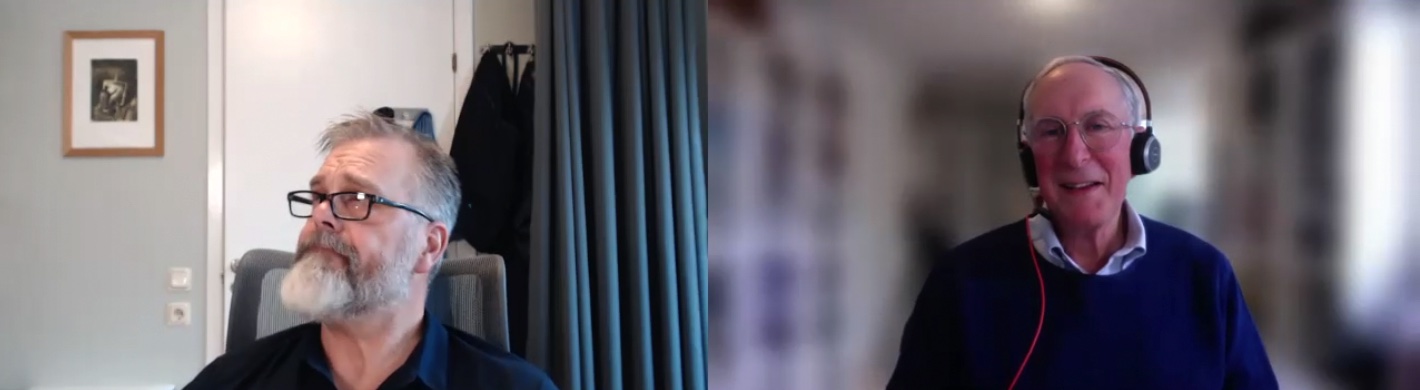
You will actually see a physical reaction, most often resulting in your guest looking away from you and often upwards before they come back to you with an answer. It is easier to sort and prioritize while looking away, and you should be happy when you see that reaction because it means there is a reflective process going on. Don’t worry; they’ll come back to you. I promised you Eureka moments in the title of this course. You won’t get them in every interview, but the chances that you will dramatically increase when you ask a question that demands reflection or prod forward from an insight to a next step When they ”look away” and then come back to you, at least you can say ”Eureka” to yourself because you’ve done something right in your interview.
In these the image below, you see Martin look away and up. He needs to reflect, and then he comes back to me with a reply. When you see that physical reaction it most often means you’ve asked a question with purpose and meaning.
The next step is ”reading” your guest and adjusting. After that, you want to lead them forward.
Just remember to be clear about your purpose. Obviously, a Talkshow can have various purposes – from entertainment to promoting a book, film, or show, to sharing an experience without necessarily leading to any special reflection. It’s okay just to have fun or a pleasant conversation.
Just a reminder – my personal goal is not fun; my goal is learning and reflecting, therefore my somewhat more serious tone and purpose. Humor is very important to me, and there will be lots of laughs, and when looking at one’s behavior and actions, there is usually a lot to laugh about. In the end, however, laughter and just chilling with each other is not enough for me. How about you?
Del 13 av 15
The fourth phase: Reading
No, not reading a book or manuscript, but ”reading” your guest and adjusting to your guest. We’ve talked about your body language as a host. Now it is time to be aware of the body language and non-verbal aspects of your guest.
Some people are very hard to read. I am not one of them. All this Zooming stuff is fine, but there is one significant disadvantage for me – I am an open book. By that, I mean, I show my feelings. If I am bored, you can tell. If I am uncomfortable, it is easy to see. If I am stressed out or simply want to be in another place, it is not hard to figure that out. I have trouble keeping eye focus. I am, simply put, impatient, and that can be interpreted as being unpolite. Which, I admit, I can be in my role as a participant.
As a host with a guest on a show, I can focus. Still, as a participant in a conference, board meeting, student, or one person in a small group Zoom conference, I can make other people nervous by my fidgety behavior.
It is essential for you to be able to read the ”state” of your guest or guests. We’ve discussed the importance of them feeling comfortable. There should be some kind of nervousness or uncertainty because that’s the nature of being interviewed, but not too much to block out their ability to reflect and answer your questions.
The point is to understand boundaries. When are you making them too uncomfortable or nervous? When are you putting too much pressure on them? You can’t measure this, only sense it. I guess it’s like Goldilocks and the three bears – the porridge is too hot, too cold, or, yum, just right. You want to dig and prod but need to find out what’s ”just right.”
Too hot is putting a person into a corner where they can’t escape – some pressure is necessary, but there are seldom advantages of trying to pry them open at any cost. Maybe that’s what I especially dislike about interviews that focus totally on past mistakes and emotions. If you don’t help your guest move forward, you are only making them (and your audience) feel bad. Don’t just revisit train wrecks and the same emotional roller coasters.
Too cold is just asking the same old questions. Aren’t you tired of that famous sports question, ”How does it feel?” Well, how do you think it feels to win or lose? That’s not interesting. What is interesting is their thought process at a certain important moment during the game. So do your best to think of” discovery” questions and do your best to avoid regurgitation of the ”same old.”
Just right is that balance of reflection, and prodding, which leads to insight. ”Hmmm, I haven’t thought about that.” Sometimes your guest will even say, ”That’s a good question,” which may be true and gives the guest time to answer the question by saying that – and that’s perfectly fine.
The list of your body language applies to your observations of your guest’s body language:
– How your guests look at you and use their eyes to retain your attention
– How the guest tilts his or her head – the ”telephone” position says I am willing to listen and communicate
– How the guest uses their voice – rising voice inflection more often conveys interest or enthusiasm.
– How the guest uses mini-pauses – waiting for just an extra half-second for a reply before responding indicates reflection
– How the guest uses timing – and seems to be willing to ”dance” with you, laugh with you, think with you, or to look at new sides of a question with you
– How your guest uses touch – which may indicate comfort, willingness, or unwillingness to get more personal
– How your guest leans towards you or away may indicate a willingness or unwillingness to proceed on the same line of questioning or theme
– How the guest uses their hands – palms up says ”yes,” palms down more often communicate ”no.”
– The guest uses gestures that communicate energy, emphasis, gathering in, or rounding off. Still, hands with a tiny pause may give a clue of importance to the guest
– The tempo of movement may indicate stress or comfort
– How your guest smiles – a smile is a direct line to acceptance and usually indicates comfort – but not all the time. Sometimes a laugh is a nervous reaction to being uncomfortable.
Do you really have to seek out and react to all these details? Yes, but most of it you do automatically without thinking. It’s the nature of our communication to adjust to the situation and people we are with. Still, the secret to the sauce of good communication is in the details. The more information you can pick up on a conscious level, the better you will become at reading the situation at hand and adjusting.
That helps you to back off if you’ve gone too far. It helps you to change the subject or help get back on track. It allows you to adapt in a way that you can further trust. By the way, you can interrupt the ”over-talkers.” I have to deal with that a lot as I usually do short interviews. I tell my guest ahead of time that I will be interrupting, refocusing, or moving on to get to a certain point. Yet, that balance between talking and listening is not always clear-cut. My goal is somewhere on the order of 70/30 – guest talks 70%, I talk 30%. Record your interviews and see when you watch or listen, measure what balance is and judge if you need to talk more or less
One of the most important aspects of your conversation is knowing when to dig and when not to dig, which I have mentioned several times before. As stated in my Talkshow conversations, I want to push and pull to help my guest towards insights and next steps. When doing this in front of an audience, I have, several times, experienced that I pushed too far. If that happens, I absolutely need to follow up afterward, ask how they are doing, and talk about what happened. In other words, this is tricky.
Some Talkshow hosts purposely push too hard to get a reaction. I remember two instances of walking out of conferences about communication when the group leader was not satisfied until the object of the interview cried or had some kind of breakthrough. You are dealing with people’s integrity and feelings, and your purpose is not to push for emotional catharsis but insight. Or, as the behavior scientists would say, stay mainly on a cognitive level, not on a deep affective level. Keep this in mind on your Talkshow. This is not a therapy session; it’s a thinking session. Nothing wrong with strong emotions or therapy, just not on this type of forum.
This is simply a plea for empathy and remembering your purpose. You are there to strengthen, not weaken, to probe but not overwhelm.
To be better at observing the reactions, do some practice. In your daily life, observe the conversations of others, or watch Talkshows on TV with a focus on things like:
– Eyes
– Head tilting
– Hands
– Gestures
– Voice tempo
– Voice inflection
– Revere (leading in or out)
– Touch
– Timing
– Posture
– Tiny pauses
– Mouth movements
– Movement in general, like how often people adjust their bodies in the chair
Don’t interpret – crossed arms means this, change of posture means this, this gesture means this. Just observe. While some observers of body language do use interpretation, I try to see it just as information – sometimes useful, sometimes not, and to trust myself to make adjustments. Practice observing this on, for example, Talkshows that you watch (or even listen to). You will automatically be able to consciously and unconsciously make adjustments and be better at what you do.
Watch the interview example with Karen.
Karen is an artist and teacher. Karen is very good at explaining what she does and how she does it. Mostly I listen and summarize her strengths and strategies – and give encouragement. She has already empowered herself. My role is simply to affirm her competency and path forward. Do that with your guests and in your conversations!
Here’s one more video – with Martha Warren, opera singer, theater director, and old friend from Camp Chateaugay in the Adirondack mountains.
Del 14 av 15
The fifth phase: Precision
As you move along in your conversation, you will sometimes find the need to clarify what your guest is saying. Likewise, sometimes you will need to check if you understand what they mean.
One of the critical elements of my approach is hunting for keywords. I keep paper and pen nearby to write some of them down.
Keywords come up when you ask the famous ”How” question. How did you do that? How did you solve that? How did you make this work?
Most of the time you will likely get abstract types of answers, with words or phrases like:
Patience
Perseverance
Enthusiasm
Desire
Daring
Passion
Planning
Experimenting
Focus
Decisive
Ambition
Curiosity
Analysis
Empathetic
Getting information
Practice
When we hear these words, we usually nod and agree. Sounds good! But, no, it is not good because you have no idea what those words or phrases actually mean.
Do you have a friend who plays golf and has gotten better recently? Ask your friend how they’ve done it, and that probably will say, ”more practice.” Or, ”I took some lessons.” Nice, but that is not valuable information. Of course, one needs to practice, but if you wish to learn from your friend you need to know how they practice, what exercises they do, how often they practice, if alone or with a coach or knowledgeable friends, and what they practice most often and which specific things they have done they think have led to the improvement. The worst thing they can tell you is, ”Well, practice makes perfect, you see.”
In fact, practice does not make perfect. Only ”perfect” practice makes perfect, and to perfect the practice, you need to know the details.
That is why the ”how” question can be so valuable to you in your conversations. You want the details.
How exactly do they plan? How exactly do they coral their passion? How exactly do they make hard decisions? How exactly do they show empathy? How exactly to get the correct information? How exactly do they maintain their focus? How exactly did they make that sale or build their company? How exactly did they learn that skill?
You go to a lecture or concert to see a particular person perform, and you come home and tell others that this person really has ”it” – charisma. Then, you think to yourself that you’d like to have more charisma when making presentations at work. To get to the next step, you will need to define the behaviors that compose charisma. Here are some:
– Standing center stage
– Standing near your audience without chairs or tables between you
– Stepping forward, not backward
– Using frozen gestures (pausing a gesture to emphasize)
– Variation of your voice to make you more attractive to listen to
– Holding a notepad or pen may give you more authority
– Having a visual in the background that lets the group know you have a plan
– Moving with decisiveness and directness
The list could be much longer. The point is, again, is that the secret is in the details. The point also is that these are all things you can learn.
So as you progress as a Talkshow host, conversationalist, coach, boss, colleague, mentor, parent, or mate, look for the details that seem to make a difference.
All the details? Well, no. Your audience probably doesn’t want to hear a ten-minute detailed description of how your guest practiced their bunker shots if your audience is not a bunch of wanna-be professional golfers. Your audience will be interested in the thought process going into a special shot your guest made at a tournament that turned out well despite a tough challenge. Why? Because the thought process of making difficult decisions under stress is a lot more interesting than the angle of the club as it hits the ball in the sand, even though that, of course, is important in the end if you are a golfer. Everyone, however, will have an interest in thought processes to succeed in a stressful situation.
This is called moving up to a higher metalevel. An orange has pits, skin, juice, and vitamins. That’s part of what makes an orange, but it also represents health, citrus fruit, or countries where oranges are grown – examples of a higher meta-level or hierarchy. Good conversationalists move between the macro (higher meta-level) and the micro, the level of details. Only ”up” and the conversation is too abstract and, in the end, often becomes tedious. Too ”low,” and the conversation consists only of minute details with no higher message or thought and thus also becomes boring. When you admire good interviewers, you will notice how they move up and down on different levels, making for a much more engaging interview.
By the way, when you read a novel that you think exhibits high-quality writing, notice that the author usually keeps a good balance between the story (the details and descriptions of people, places, and events) and the meaning (the bigger values themes).
When you end the interview or talk and do a quick summary, you mention both levels – the higher message and an interesting detail or a specific coming action.
Now we come to the concept of precision, which means helping your guest clarify the next step. Here’s a sports metaphor you may like (or not)…
The soccer team you coach is down 2-1 at halftime. Your job as a coach is to do three things during the halftime break: 1. Improve attitudes and psychological states of mind (encourage, inspire) 2. Change the physiological state of the team – too tense; they won’t be able to perform at peak level, and too relaxed won’t help either. Every sport has its maximum physiological level of tension (compare weight lifters who need a high tension level to swimmers who with too much muscle tension will have a hard time finding their rhythm). 3. Give specific examples of behavior change or tactical changes so that each player knows exactly how to perform better in certain situations.
A pep talk (or bawling out) does not suffice. Playing intense music or drinking a bottle of Gatorade alone will not work. To give ”how-to” information is not enough either. It’s the combination of all three: Psychology, Physiology, and Methodology that has the best chance of leading to a positive change.
It is pleasant to have a good conversation, but if one of your purposes is to help your guest find the next step towards success, change, or growth, you need to move towards a clear idea of the ”method” for their next step. The problem is that the more specific you get, the easier it is to resist. If you clearly identify the next step, your guest or conversational partner may feel threatened. ”Yikes, I have to do something.” Or they may say that they have tried that and it failed, or it wouldn’t fit their lifestyle or that their colleagues or family members wouldn’t let them do it. Being specific can lead to resistance, and your guest will want to get back to their generalizations or analysis without the pressure of actually doing something.
What does work is identifying something so specific and easy that it can be accomplished or tested within the next 48 hours.
The mistake that is often made is trying too hard to ”change” the other person – their personality, values, habits, behavior, and motivation. I understand you may want that to happen. I am just saying that that usually backfires. Moving your guest or conversational partner forward is done by identifying something so specific, easy, and simple that they will have difficulty avoiding doing it. The most significant benefit is that something specific is much easier to follow up.
The famous motivational speaker Zig Ziglar sums it up with his declaration: ”Don’t become a wandering generality. Be a meaningful specific.”
Some examples:
Ask who. Your guest, colleague, mentee, or other conversational partner is talking about an issue they are having with other people and talks in generality by saying something like, ”I just can’t get through to them. They don’t understand.” You can nod your head to show understanding. After that, ask them to choose one of the people in the group that they would like to get through to. Many will respond by saying it’s several people or the whole group. You do not accept that as a reply; ask them, again, to be specific. – You don’t have to say aloud who it is, but I need you to think of just one of these people you would like to be able to get to ”understand” you.
After a bit of resistance, most people will come up with that one person they can begin with. This makes the rest of the conversation that much easier – because now you have a specific person to think about. What would be a good question to start a conversation with this person? How would you formulate your question, and what body language do you need to think about? With prodding, your guest will identify a highly specific behavior with a specific person. Finally, your guest has something specific to do, and you have something to specifically to follow up.
Ask how. You have asked your guest to describe a recent success. Small successes are just as interesting to listen to as enormous successes. Say they describe a work project that turned out well. Among other things, they tell you that they got their supervisor to buy into the project and give his or her support. Try then to identify what, specifically, your guest did to get the supervisor to provide support. How did you do it? The how the how question is great, but that doesn’t mean it is simple to reply. It requires a reflective search after the specifics, and many times that will be hard to identify. Prod and ask until you can clearly identify at least one specific behavior that helped.
You have then identified one or more key behaviors that will also help in coming challenges or similar circumstances.
Bridge to the future. Bridging to the future is asking your guest to identify a new situation in which those behavior skills and actions that worked could be beneficial. For instance, there may be another person they wish to influence or cooperate with or work out a difference with. The idea is to use what worked in the past to something that will happen in the future. That’s when applied learning takes place. A goal of your conversation is to move your guest forward. You are giving them faith in themselves and hope for future challenges.
Ask when. Your guest has identified a specific event or challenge, how they succeeded in the past, whom they want to influence and how they can use what they have learned in a future dilemma. Ask the when question. ”You know who. You know what to say. You know how you are going to say it. Now, when will you meet this person?” Pin down a date and a time. Feed it back: ”So you are going to meet X on Tuesday at 10 AM and ask her Y with a softer voice and outstretched hands, palms up?”
Keywords. One more piece of advice here: Constantly hunt for keywords that, if possible, you write down. As mentioned before, keywords will often be abstract generalizations but serve as a stepping stone. Here you have something to dig into, to identify in behavioral terms, and thus move towards more specificity.
Summarize. Summarize what you are hearing and what decisions are being made at several points in your conversation. You want to know if you understand, and when getting an affirmation from your guest, this will let you know you are on the right path. Summarize yourself at the end, or ask your guest to summarize.
Watch the video example with Tavish
Tavish is also one of these students that knows how to get from A to B. I admire his clarity, and my job is simply to summarize keywords, key characteristics, and key methods that help him on his way in school and life. I am always amazed at how well students can actually articulate their learning process. Everyone, however, needs to feel affirmed for their efforts, and that is one of the major purposes of this empowerment conversation.
Del 15 av 15
A template to follow
This is the template I have in the back of my head for my strength-based, brief time coaching-oriented conversations and interviews. Each conversation is, of course, unique. Your purpose may be very different than mine. Here’s my way of thinking, and use it if you wish:
1. Create permission and present the time frame, purpose, and structure of your talk.
2. Decide on a general theme for your talk with that person – it could be a success, personal growth, professional development, dogs, cats, films, sports, TV shows. Actually, almost anything will work as a starting point.
3. As you talk about that theme, ask your guest what is most interesting, most successful, what they learned, or what is most surprising.
4. Hunt (and write down if practical) keywords that describe some aspects of their success, learning, why something was interesting, or what surprised them most.
5. Choose one keyword to focus upon. You are hunting for a reason behind the word – why was this interesting, what did you do, what behavior helped you, what values are this about? You need to go ”fishing” but are looking for something to focus and dig into in your conversation.
6. Focus on How – how, specifically, did they succeed, learn, change, and take a turn in the right direction. Focus on one keyword and the strategies behind it with your how questions. The more specific you get, the better.
7. Link to a future challenge. What do you want to change, learn, succeed at, try out, etc., and how can they use the keyword and their past specific strategies to meet the challenge ahead? Always move from the abstract to the specific.
8. Connect one or two very specific behaviors to a specific situation or person, time, and date where they can apply a specific behavior – preferably within 48 hours. Frame it as an experiment – something they can try out and see if it can help.
9. Summarize – keyword, specific behaviors, time, and place of carrying out their experiment. Either you or, better yet, your guest does the summary.
10. Ask when you can follow up to know how things went with what they agreed to try and do.
Yes, that is a lot to think about. It will become second nature to you as you practice. In other words, to be successful, it will be helpful to:
Understand the general purpose of your role as a Talkshow host, teacher, leader, parent, friend, etc., to encourage and push a little deeper into your guest’s future actions.
Generalizations and abstractions can make for interesting conversations, but first, when you turn those keywords, abstractions, theories, or generalizations into specific behaviors to try out, can you increase the likelihood of development and growth.
Aim to identify a specific action – the what, when, who, where, and how of their next step.
If possible, follow up. How did things go? What did you learn? What will you do differently next time?
I can imagine that you think that this template or way of thinking may seem overbearing and overworked. Must every conversation lead to a specific behavioral change? The answer is No. Sometimes you just want to have a friendly conversation without expectations of change, growth, analysis, or deeper digging.
I get that. Sometimes a Talkshow is for the sole purpose of entertainment. For the eleventh time, I repeat – it depends on your purpose, and purpose can change from situation to situation.
If your motivation is to have more interesting and rewarding conversations, privately or publicly, then hunt for keywords and phrases and then prod towards reflection and action.
Want to learn more from me?
Ask for an estimate and set up a date and time for a meeting or mentoring session via E-mail John. See more at steinberg.se
Four mentoring possibilities:
- Send me some clips from your interviews and conversations, and I’ll give you feedback.
- Set up a time for a strength-based interview for yourself based on the methods in this course.
- Set up a time for a small group or team Talkshow based on the methods in this course.
- Set up a time for a training session, live, where I teach the principles behind the brief-time strength-based method to your and/or your staff.
Want to learn more from others?
Three of my mentors:
Mike Pegg: world-class mentor and encourager: https://www.thepositiveencourager.global/welcome-to-the-positive-way/
Michael Grinder, one of the worlds leading experts on non-verbal (and verbal) communication: michaelgrinder.com
Martin Richards, expert coach: http://www.martinrichards.se/martin-richards.html